cinephile bibliography
...reading recommendations

This post is for the film nerds who are always looking for something to read.
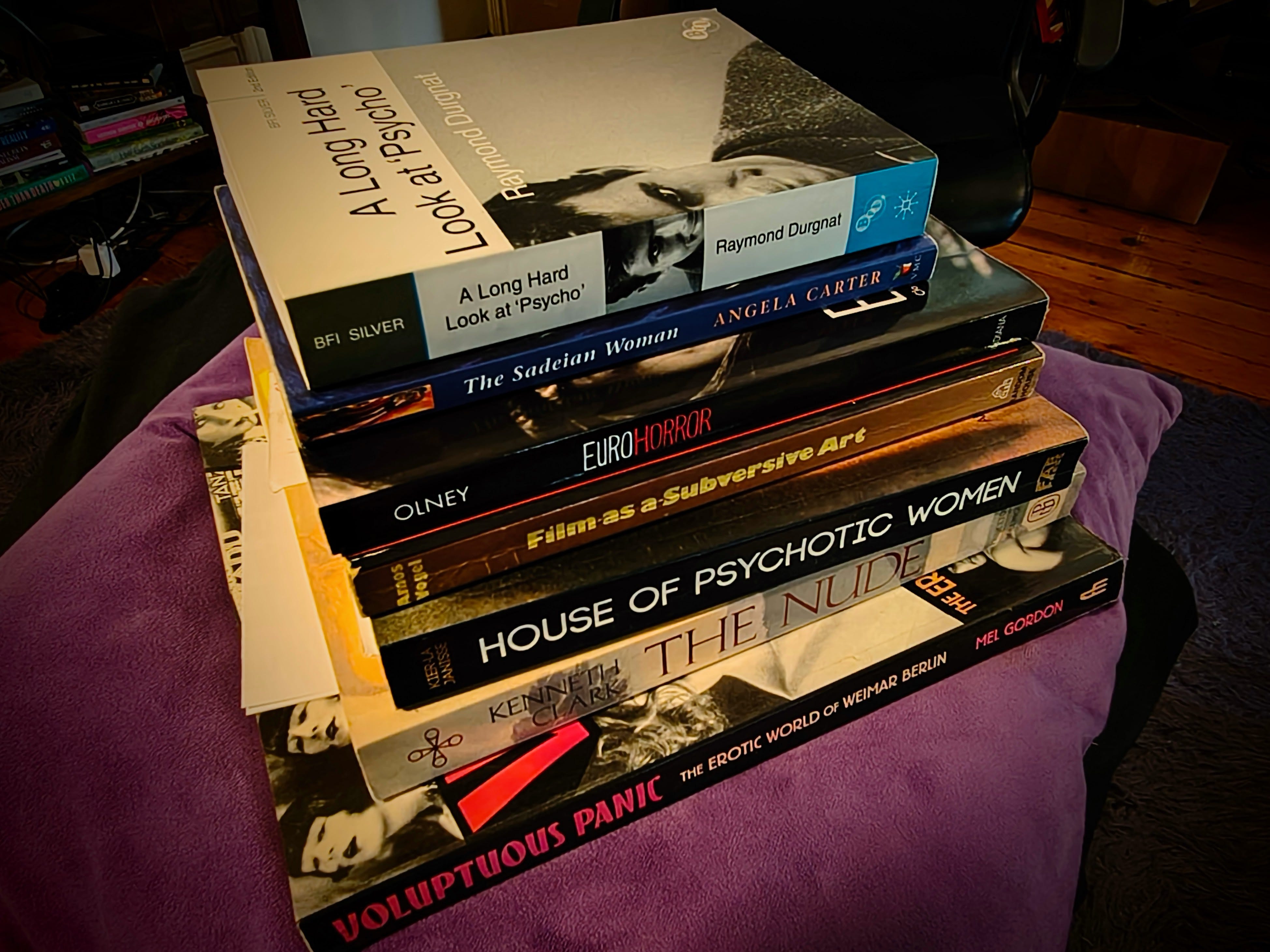
Originally I was going to publish this bibliography of recommendations at the end of an essay I am working on about my influences and critical framework. Then I decided it deserves its own post, so people can focus on it. One of my favorite things about writing is all of the research that leads up to it. Here are about forty books and essays that have shaped the way I watch movies and write about them. As I look back over this list it is gratifying to know I have developed such a critical background, and makes me appreciate the privilege of higher education I got to experience. This feels so much more important as smaller schools continue to close each month, under the weight of the enrollment cliff, the residual effects of Covid, an aggressive economy, and the authoritarian assault on education by The United States government. Some of the entries have a brief explanation or memory attached to them.
I am hesitating on the essay about my influences, mainly because I am debating whether to make it fast and fragmented, or turn it into a whole series of essays, with each one covering a core idea. Some of the subjects I fixate on are active vs passive spectatorship, Brechtian alienation and how this unintentionally relates to low budget cinema, visual pleasure without shame as opposed to guilty pleasure, dreamlike abstraction over ideological didacticism (which overlaps with active/passive spectatorship), scopophilia, voyeurism, and fetishism as engines of cinematic desire, etc. Let me know if any of these subjects particularly interest you, and whether you would prefer a single essay covering all the things, or a series that takes its time!
And now for some recommendations:
GENERAL BIBLIOGRAPHY
Anger, Kenneth. Hollywood Babylon. New York: Dell Publishing, 1975.
So much fun to read. More about the spectacle of Hollywood than any kind of truth. Maybe the spectacle is its own truth.
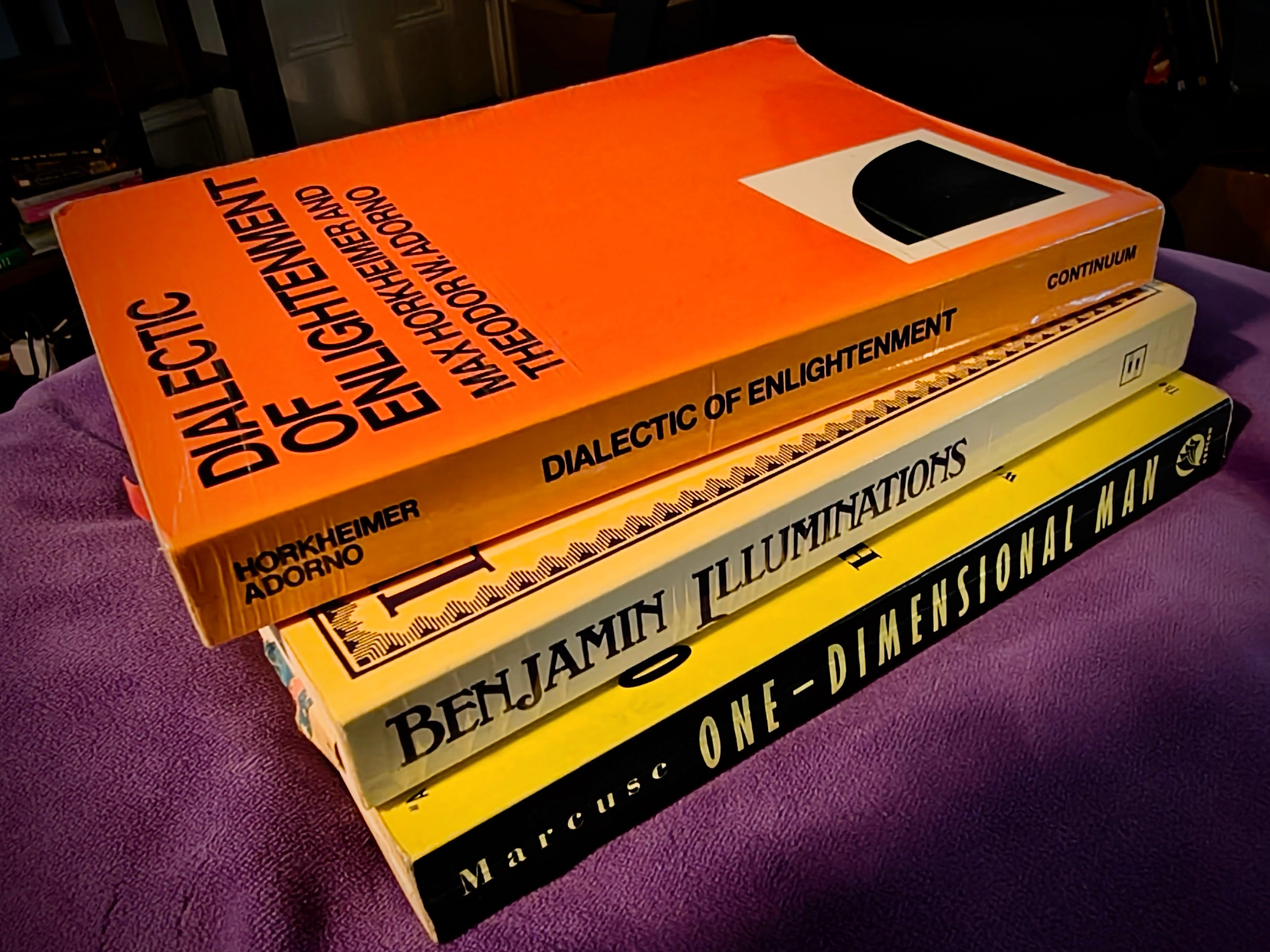
Benjamin, Walter. Illuminations: Essays and Reflections. New York: Schocken Books, 1968.
My ultra-liberal arts education got me indoctrinated into Frankfurt School thought. Still thinking about that mechanical reproduction all these years later.
Berger, John. Ways of Seeing. London: Penguin Books, 1972.
Foundational art history text that sheds light on how we watch movies, specifically in context to traditional, gendered gazes.
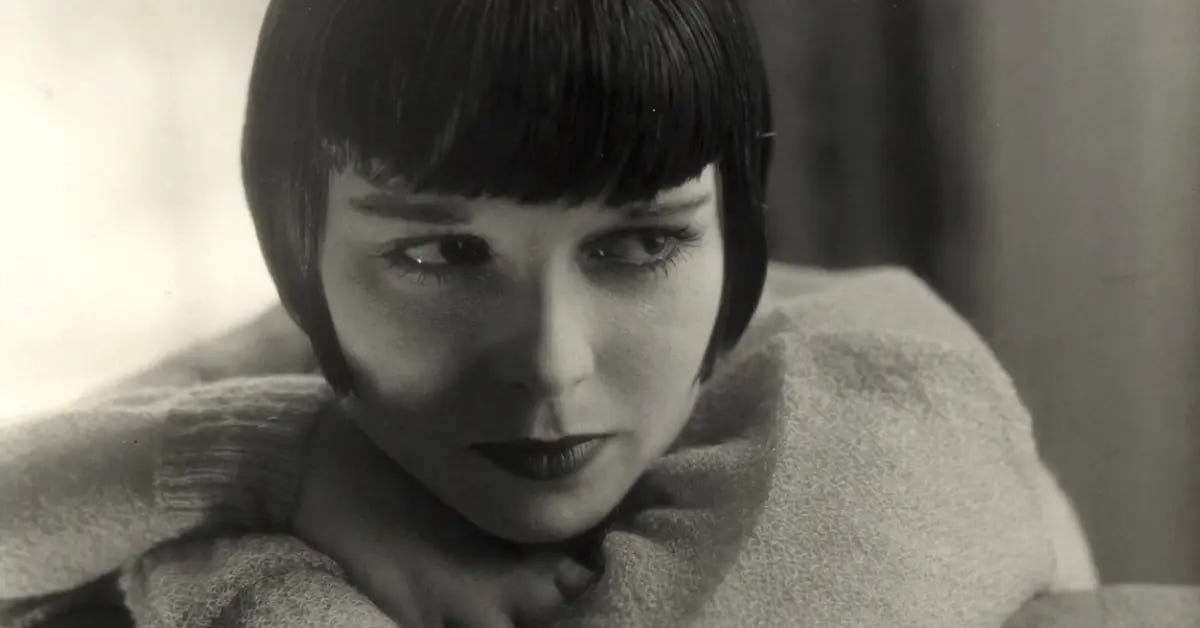
Brooks, Louise. Lulu in Hollywood. Minneapolis, University of Minnesota Press, 1974, 1982.
We have all seen Louise dominate the screen in silent cinema, and it is that much more gratifying when you read her words on it.
Buñuel, Luis. My Last Sigh. New York: Vintage Books, 1983, 2013.
Essential film history reading straight from the horse’s mouth.
Burroughs, William S. Naked Lunch. New York: Grove Press, 1959, 2001.
One of the only works of fiction listed here, which is continuously relatable to so much of what I write about.
Carter, Angela. The Sadeian Woman. London: Virago Press, 1979.
A defining work that approaches feminism with a kind of pleasure-centric transgressive morality that is not frequently seen in contemporary discourse.
Clark, Kenneth. The Nude: A Study in Ideal Form. Princeton, NJ: Princeton University Press, 1956, 1990.
Ever wondered what the difference between naked and nude is? Maybe you should read this.
Clover, Carol J. Men, Women, and Chain Saws: Gender in the Modern Horror Film. Princeton: Princeton University Press, 1992.
A cornerstone of horror cinema criticism.
Creed, Barbara. The Monstrous-Feminine: Film, Feminism, Psychoanalysis. London: Routledge, 1993.
Cronin, Paul (Editor). Herzog on Herzog. London: Faber and Faber, 2002.
I remember reading this in college and feeling so ecstatic about how inspirational it was.
Davenport-Hines, Richard. Gothic: Four Hundred Years of Excess, Horror, Evil and Ruin. New York: North Point Press, 1998.
Surprisingly comprehensive, covering how gothic has been defined over the past 300 years.
de Lauretis, Teresa. “Cavani’s “Night Porter”: A Woman’s Film?” Film Quarterly, Vol. 30, No. 2 (Winter 1976-77)
Durgnat, Raymond. A Long, Hard Look at Psycho. London: BFI, 2010.
A piece of more traditional film criticism that shows how someone can easily dedicate hundreds of pages to one movie. It illustrates just how significant Psycho is in 20th century visual culture.
Durozoi, Gérard. History of the Surrealist Movement. Chicago: U of Chicago Press, 2002.
A huge tome I will probably never get completely through, but always good for reference.
Elsaesser, Thomas. Fassbinder’s Germany: History Identity Subject. Amsterdam: Amsterdam University Press, 1996.
Probably my favorite critical book about Fassbinder.
Farrow, Ronan. Catch and Kill. New York: Little, Brown and Co, 2019.
This book is a great reminder of just how monumental the Weinstein story is in contemporary culture, and just how much money, time, and effort is put into protecting predatory rich men.
Fox, Charlie. This Young Monster. London: Fitzcorraldo Editions, 2017.
Includes my favorite essay ever on RWF, “Herr Fassbinder’s Trip to Heaven”. Also includes chapters on the freaky nature of Buster Keaton, Leigh Bowery and more!
Freud, Sigmund. The Interpretation of Dreams. New York: Basic Books, 2010.
Geimer, Samantha. The Girl: A life in the shadow of Roman Polanski. New York: Atria Paperback, 2014.
An account of Polanski’s crime and scandal told from the survivor’s perspective. Nearly fifty years later people still talk about her as a victimized young girl. As a lover of Polanski’s films despite his criminal acts, I have found some peace knowing that Samantha is just an average grandmother now who has made amends with Mr Polanski, outside of the perennial media spectacle she has had to endure for most of her life.
Gordon, Mel. Voluptuous Panic: The erotic world of Weimar Berlin. Los Angeles: Feral House, 2000.
Hebdige, Dick. Subculture: The Meaning of Style. London: Routledge, 1979.
Cult cinema is very much about subculture, and this book shows the evolution of style in the second half of the 20th century. Not a film book, but one that defines the circumstances around styles and trends in cinema.
Heller-Nicholas, Alexandra. The Giallo Canvas: Art, Excess, and Horror Cinema. Jefferson, NC: McFarland and Co, 2021.
For the cult film nerds who are also art history nerds.
Horkheimer, Max and Theodor W Adorno. Dialectic of Enlightenment. New York: Continuum, 1944, 2000.
Janisse, Kier-la. House of Psychotic Women: An autobiographical topography of female neurosis in horror and exploitation films. Surrey, UK: FAB Press, 2012.
Its reputation precedes itself.
Juno, Andrea & V. Vale. RE/SEARCH #10: Incredibly Strange Films. V/Search: San Francisco, 1986.
I could include many of the books Vale has published under Re/Search over the years. This is the most film related.
Katz, Robert. Love is Colder than Death: The Life and Times of Rainer Werner Fassbinder. New York: Random House, 1987.
The trashy, more tabloid book about Fassbinder that is so fun to read.
Koven, Mikel J. La Dolce Morte: Vernacular Cinema and the Italian Giallo Film. Lanham: Scarecrow Press, 2006.
A book that helped out my master’s thesis a lot. Defines the cultural context around the invention of giallo.
Kristeva, Julia. Powers of Horror: An Essay on Abjection. New York: Columbia U Press, 1982.
Iconic.
Laplanche, Jean and J.B. Pontalais. “Fantasy and the Origins of Sexuality.” The Internal Journal of Psycho-analysis, Vol. 49. 1968
For the deep readers who want to obsess over the difference between fantasy and phantasy.
Marcuse, Herbert. One-Dimensional Man. Boston: Beacon Press, 1964, 1991.
Means Coleman, Robin R. Horror Noire: Blacks in American Horror Film from the 1890s to Present. New York: Routledge, 2011.
Modleski, Tania. The Women Who Knew Too Much: Hitchcock and Feminist Theory. New York: Routledge, 1989.
Hitchcock was pretty conservative, but also a lowkey freak. Either way, his female characters are always somehow fascinating, as this book shows us.
Olney, Ian. Euro Horror: Classic European Horror Cinema in Contemporary American Culture. Bloomington, Indiana U Press. 2013. p. 117.
I’m surprised that this book isn’t discussed more. I don’t think I have ever seen anyone cite it. Check it out, it is an excellent re-consideration of the power of spectatorship!
Pasolini, Pier Paolo. “The Cinema of Poetry.” Movies and Methods Vol. 1. Ed. Bill Nichols. Berkeley: U of California Press, 1976.
Ravetto, Kris. The Unmaking of Fascist Aesthetics. Minneapolis: U of Minnesota Press, 2001.
I already included citations from this one at length last year in a few essays, https://lefthandpath.substack.com/p/compliance-compromise-and-survival
Sergeant, Jack. Flesh and Excess: On Underground Film. Los Angeles: Amok Books, 2015.
I read this soon after it came out when I happened to be volunteering for Artists’ Television Access and The Chicago Underground Film Festival, and it was like I was suddenly reading about the world I exist in.
Vogel, Amos. Film as a Subversive Art. New York: Random House, 1974.
Foundational.
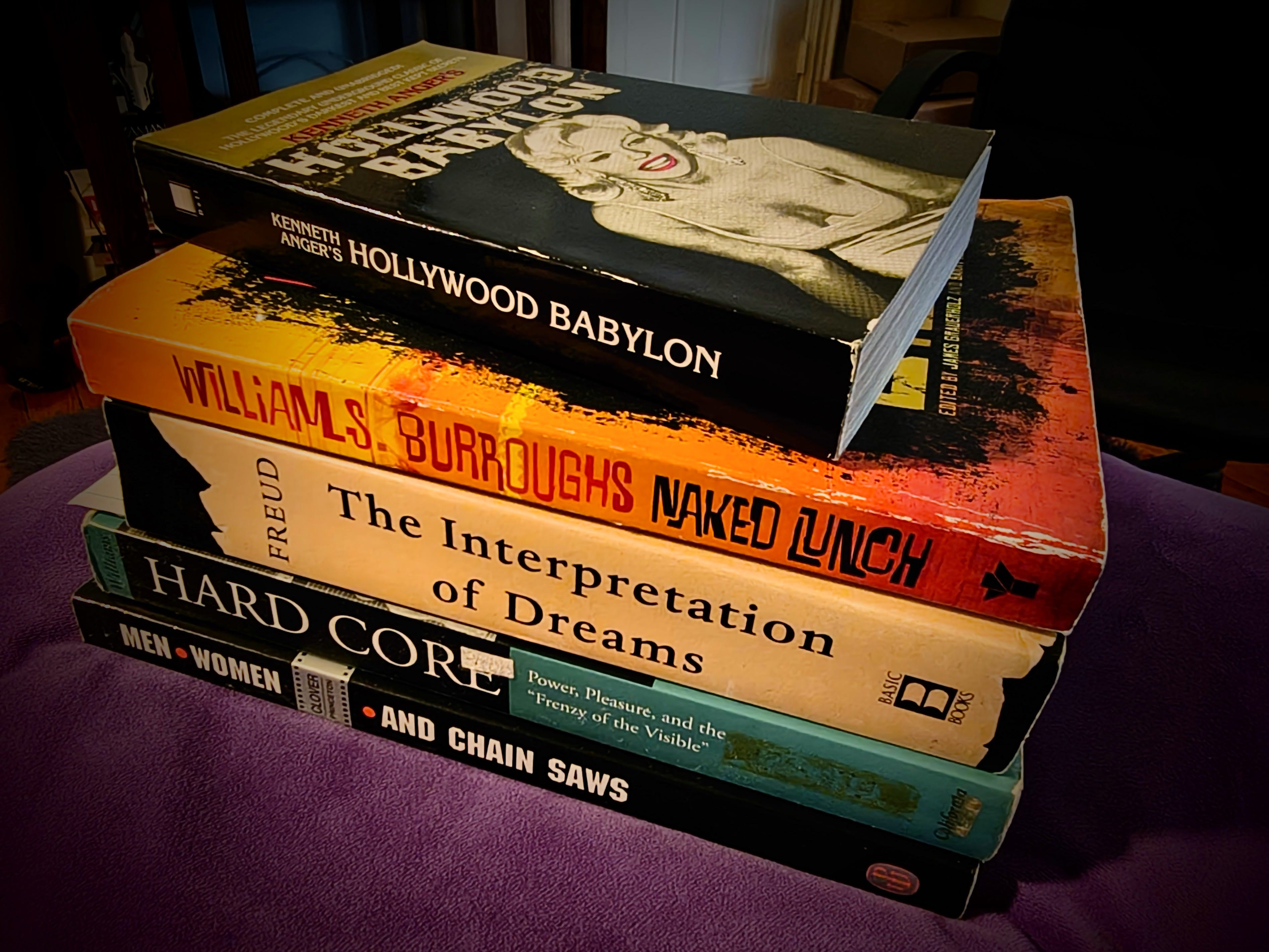
Williams, Linda. Hard Core: Power, Pleasure, and the “Frenzy of the Visible.” Berkeley: U of California Press, 1999.
A porn studies book that made me reconsider all of cinema.
Williams, Linda. “Film Bodies: Gender, Genre, and Excess.” Film Quarterly. Vol 44. No 4 (Summer 1991).
Body genres, anyone?